What it measures
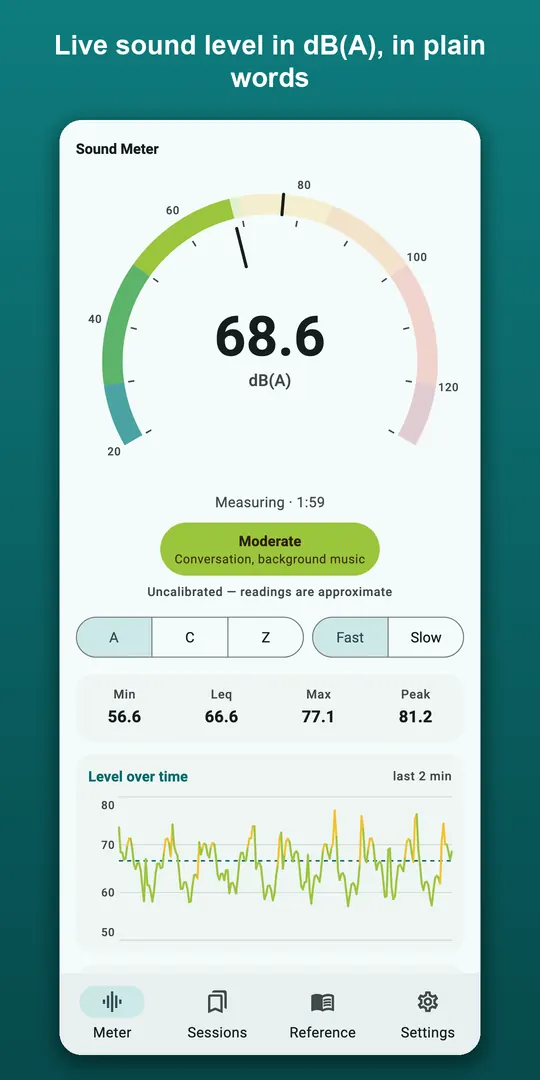
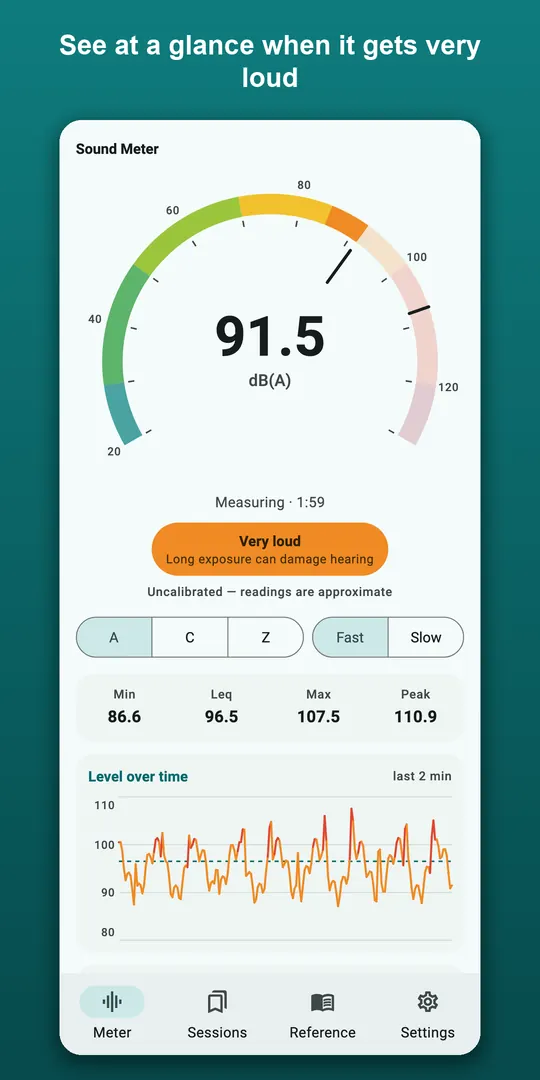
- Live sound level in dB(A), dB(C) or dB(Z) on a dial from 20 to 130 dB
- Fast or Slow response, as on a real sound level meter
- Min, Leq (the true average), Max and Peak for the session, with a two-minute chart
- A plain-language band for every level, from very quiet to painful
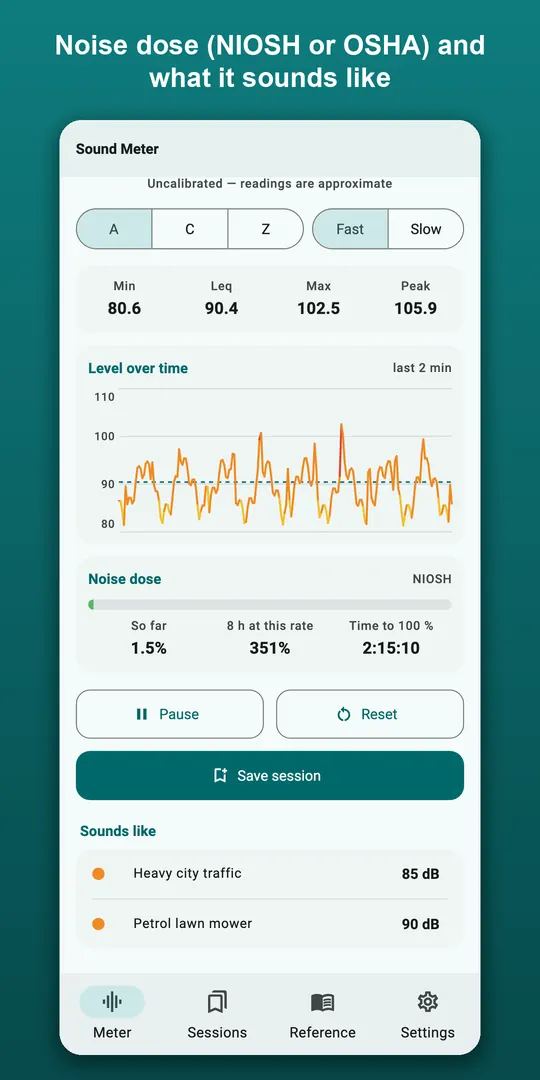
Noise dose
See how much of a full day's safe exposure the session has used under NIOSH (85 dB(A), 3 dB exchange) or OSHA (90 dB(A), 5 dB exchange) limits, with the projected 8-hour dose and the time left before 100%.
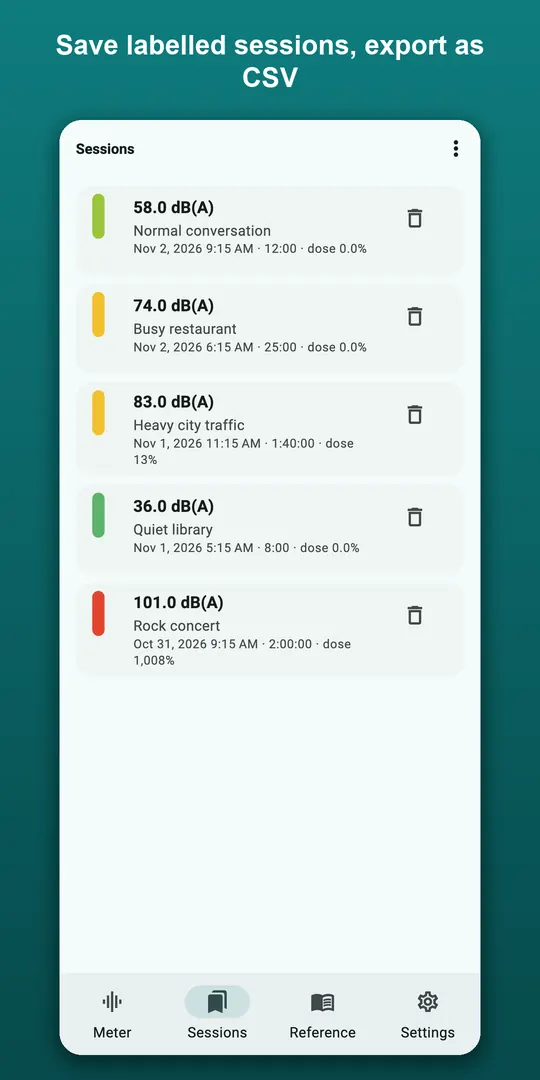
Save, compare and calibrate
Save labelled sessions with their charts and statistics, export CSV, and keep your last session on a home-screen widget. Phone microphones differ by several dB, so you can calibrate against a reference meter in one step.
Honest about its limits
The app uses the microphone input Android reserves for measurement with automatic gain control off, and warns when the microphone is overloaded. Sound is analysed and immediately discarded: nothing is recorded, stored or uploaded. It is not a certified instrument or medical advice.
Questions
- How loud is too loud?
- NIOSH recommends limiting exposure to 85 dB(A) averaged over 8 hours, with the safe time halving for every 3 dB above that. The app's noise dose shows how much of that allowance you have used.
- Is a phone decibel meter accurate?
- Phone microphones vary by several dB. Calibrating against a sound level meter in the app makes readings much closer, but it is not a certified instrument.
- Does the app record audio?
- No. Sound is analysed on the device and discarded immediately, and the microphone is used only while the app is open.
Free on Google Play, supported by ads. Read the Sound Meter privacy policy. Questions or a bug? Write to support@tahatec.com.